
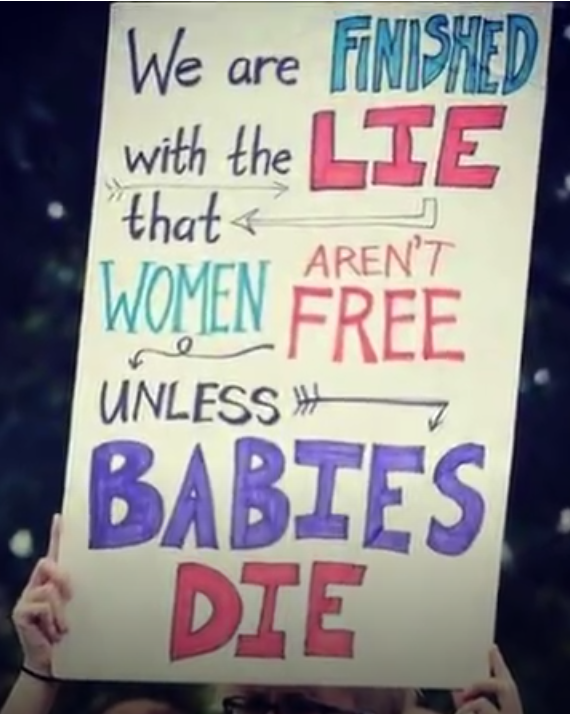
Being anarchist - being pro life
Table of Contents
I wrote this article to convey some of my thoughts on abortion — including on ways anarchists can practice a pro-life ethos without involving the state.
Introduction
I was recently listening to an anarchist whose views on many important questions I agree with when they touched on the question of abortion. And I was disappointed by the cavalier — and somewhat careless — remarks they made on the subject. They were emphasizing the importance of ‘bodily autonomy’, which raised my attention. When people — anarchists or not — use the term ‘bodily autonomy’ they generally can be alluding to either 1. the right to refuse certain medical treatments (e.g. vaccination), or 2. the ‘right’ to abortion. As soon as the gentleman in question referred to ‘reproductive freedom’ his meaning in this context became clear. [1]
Continuing in his (implicit) defense of abortion, he implied that anti-abortion laws are tantamount to ‘violence’ upon women — whether such violence is manifested through imprisoning those who are party to the act of an illegal abortion, on the one hand, or through preventing the woman from having the abortion in the first place on the other. But — as all those who defend abortion do — he wholesale ignores the violence done to the unborn child. As anarchists, we have to speak out against all forms of violence and all forms of domination — including (or perhaps even especially) those committed upon the unborn.
The ‘pro-choice’ defense
The attitude adopted by ‘pro-choice’ advocates, essentially, is that a foetus has no sentient existence of its own and is therefore unworthy of inclusion in the moral considerations. [2] Or, if they begrudgingly acknowledge its sentience, they portray its existence as that of a parasite — an unwanted and unwelcome ‘burden’ on the mother; an ‘intruder’. In any case, they will employ whatever mental and moral gymnastics are necessary to refuse to acknowledge that — in every pregnant woman — a separate expression of life (distinct from that of the mother) is being brought in to the physical world, and that that life needs nurturing and protection — not a forceps or a lethal injection.
Regarding the insinuation that critics of abortion have taken it upon themselves to ‘tell a woman what to do with her body’: it’s not so much that they seek to ‘tell her what to do’ with ‘her body’. They seek to emphasize, rather, that there is a separate life developing inside her — and that what she chooses, in this special instance, to do ‘with her body’ has irreversible consequences for either the survival and potential flourishing of that life — or its premature termination.
Many skeptics of abortion (myself included) could — in general — not care less what a woman ‘does with her body’ — until she becomes pregnant. Some religious pro-life people may indeed condemn certain lifestyles or, e.g., consensual adult relationships which have little or no relation to the issue of abortion, but as I have tried to emphasize elsewhere in this article these issues should be considered separately.
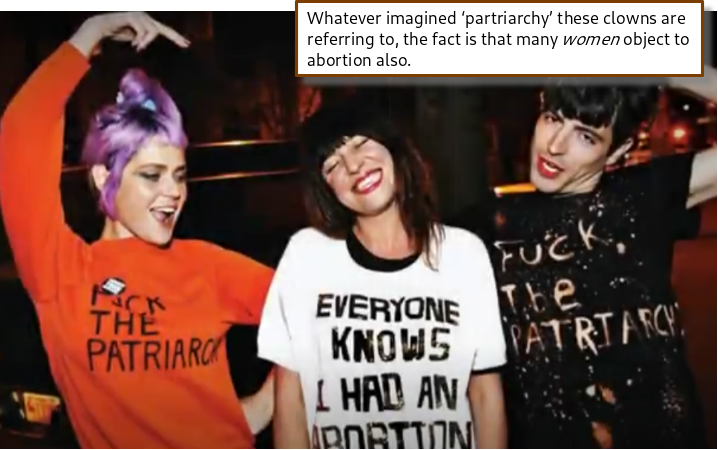
Being anarchist — being ‘pro life’
There is no contradiction, in my mind, between being an anarchist and being ‘pro-life’. To be an anarchist means to reject manmade law (not just ‘for the sake of it’ — but when it is opposed to morality) and to embrace the moral framework associated with Natural Law instead. Within this framework, the difference between right and wrong can be framed quite simply: a ‘wrong’ is something which causes harm (either directly or indirectly) to another sentient being. Once, then, we acknowledge that a foetus has at least the capacity for or at least some level of sentience — or perhaps more importantly the capacity for a level of sentience equal to our own in the not-so-distant future — how can we categorize the act of abortion as anything other than a wrong? As anything other than an act of violence?
As it stands many so-called anarchists reject this line of reasoning. They responsively parrot the usual slogans about ‘bodily autonomy’ while ignoring that there is a second being involved — a second life — within the pregnant woman’s ‘body’. By and large their attitude is cavalier and dismissive — wholesale ignoring the presence of another life which (if granted the opportunity) will surely one day aspire to its own ‘autonomy’.
I am aware of a handful of anarchists who have spoken against abortion. Mark Passio, for example, has touched on the subject in his podcasts. He regards abortion as being against Natural Law. Jana Espiritu Kimble — also a Natural Law anarchist — has created a video series on abortion and its relation to the philosophy of eugenics. The series can be found here. Shout out to these people for their outreach and for being philosophically consistent!
Abortion and the state machinery
I put the term ‘pro-life’ in quotes throughout this article because — as anarchists — we should convey our ethos in different ways to those who are pro-life but also support and defend man-made laws and the state. As anarchists, we should — where possible — try to spread and live by our ‘pro-life’ message without resorting to the use of the state machinery.
As anarchists, we don’t lobby legislators to change manmade laws. And us few anarchists who are openly ‘pro-life’ probably don’t advocate imprisoning those who perform or undergo abortions either — or at least don’t view this as an ideal or even enviable long-term solution. (Prisons, after all, are tools and constructs of the state.) So what can we do to express and live by a ‘pro-life’ ethos? Aside from seeking ways to support pregnant women — even (or especially) those whose pregnancies were unwanted or unexpected — what can we do?
What can we do?
For one thing, we can try to explain to young women that — should they ever be victim of a sexual assault — abortion is not the only option. In doing so, we can perhaps preempt the drastic outcome that many campaigners for abortion portray as a ‘small and insignificant matter’. But we can do more.
We can (where appropriate) try to exert ‘moral pressure’ — for example by explaining that we want to cut ties and end relationships with those who practice or even condone and support abortion. And by explaining to these people that — to the extent possible — we want them ‘out of our lives’. And that we don’t want them back in until they acknowledge abortion for what it really is (an act of violence); and in the case that they have actually participated in an abortion until they have expressed meaningful remorse for what they have done.
Conflation of abortion and other moral issues
There is a tendency to conflate abortion with other moral issues and to assume that pro-life views are held mostly by ‘right-wingers’ or adherents to conservative religious ideas. An impression has been formed in the public psyche that pro-life advocates hold oppressive and dogmatic views on, for example, same-sex relationships. There are, of course, many pro-life individuals whose views on abortion are part of a broader religious outlook — and who in some cases may indeed harbour prejudices against people of, for example, a certain sexual preference or orientation. However, we should not turn from an important moral cause (speaking out for the unborn) just because some proponents of that cause have ‘archaic’ beliefs on other contentious moral issues.
As it stands, there are already people speaking out publicly who are both pro-life and supportive of LGBT individuals. One such group, for example, is LGBT Pro Life Ireland.
Abortion and the rights of the unborn are not ‘religious’ issues; they can be examined on their own. We need to examine each moral issue separately, and not shy away from speaking out on vital topics (such as abortion) just because others speaking out hold views (on other moral issues) that we disagree with (perhaps even profoundly). [3]
Hard cases
A typical defense of ’moderate’ pro-choice advocates is that abortion should be available to victims of rape — if not for women going through ‘unwanted pregnancies’ in general. In recent years certain jurisdictions have tried to introduce legislation which allowed abortion even up until birth. This disturbing fact has led some such ‘moderate’ pro-choicers to air their opinions publicly. A well-known independent media host in the UK, for example, recently discussed on his podcast an abortion bill tabled by extreme ‘pro-choice’ advocates. He took pains, in doing so, to emphasize that he was not opposed to abortion per se, and (in so many words) that he would ‘never tell a woman what to do with her body’ — especially (leading to the typical example of a ‘hard case’) a ‘14-year-old girl who had been raped’.
But — not ignoring the seriousness of such a situation — such remarks strike me as ultimately disingenuous. They are disingenuous because — as has been evident for some time now, to anyone who even briefly examines the history of pro-choice organizations such as Planned Parenthood, for example — the wider ‘pro-choice’ movement has never really truly been about alleviating the trauma and suffering of victims of sexual assault. They might pay lip service to the goal of helping girls and women in such situations — in an attempt to shame and silence critics — but if this was their primary goal they would have settled for abortion to be legalized only in such cases. But they didn’t stop there; they went much further.
Exploring all options
Anyway … Why is abortion appealed to as the first and most viable ‘course of action’ in such a scenario? Isn’t there a tendency for people to assume — when they hear of such controversial and traumatic cases — that the young woman doesn’t want to proceed with the pregnancy? But why would we assume that? Extreme pro-choice advocates might try to characterize someone who expresses reservations about choosing abortion in such cases as ‘forcing the young woman to go through an unwanted pregnancy’. But have you actually asked the young woman what she really wants? Have you explained to her that — even if she didn’t feel ready for the responsibility of motherhood — that didn’t imply that abortion was the only option? Have you explained or reminded her that there are many loving homes and couples who would happily adopt a child? And in the case where she didn’t feel fully prepared for motherhood, on the one hand, but couldn’t bare the thought of being separated from her child on the other, have you explored compromises and more creative arrangements — such as seeking out other family members or (even distant) relatives who could help to raise the child in the early years?
If you haven’t made an earnest effort to explain and discuss all possible options with a rape survivor, why not? And why would you characterize someone who does want to broach such a discussion — to put on the table and explore all conceivable options — as trying to ‘force’ the woman (or girl) to undergo the pregnancy?
No serious critic of abortion disputes the moral dilemma in this situation, and their goal is not to heap moral condemnation on the young woman — even if she chooses to terminate the pregnancy. From my perspective, however, there generally is a moral failure on the part of others in such cases — those others who fail to explain all options and present abortion as the only one. Were it not for such moral failures of certain ‘pro-choice’ advocates, there would be many more people alive today — as well as young mothers who came through their trauma and came to love their child.
Philosophical inconsistency in some pro-life corners
Certain conservatives who speak out vocally against abortion hold deeply problematic — even repugnant — views on other social and moral issues. This is starkly evident from their attitude on perhaps the greatest modern social problem — homelessness. They are all too quck to attribute the predicament of those who find themselves destitute to personal failings or ‘bad life choices’. They cavalierly (and completely unscientifically) use terms like ‘mentally ill’ in referring to the homeless. When they are being honest and forthcoming they openly disclose that they would like to see these ‘bums’ rounded up and locked away, since — after all — such people have ‘no interest in contributing to society’ and — even if they did — are not necessarily ‘fit to do so’. Even when these critics are more circumspect in their language, it is not difficult to infer what their ‘solution’ is by reading between the lines.
Such conservatives view homeless people themselves as the ‘plague’. They wish to remain thoroughly oblivious to the true underlying causes of the housing crisis, and will not bring themselves to acknowledge that the real ‘plague’ is the attitude, worldview and behaviour of wider society — and often those within society who are held by the public in the highest esteem, including many conservatives.
From my view, ‘rounding people up’ and locking them away (which certain ‘pro-life’ conservatives view as the ‘solution’ to homelessness) is a stone’s throw away from euthanasia. Carting homeless people off to an institution to be ‘rehabilitated’ — particularly when done under the pretext that the person is ‘mentally ill’ — is difficult if not impossible to reconcile with a truly ‘pro-life’ ethos. Many people who have entered such institutions have remained there indefinitely; or even if they were released it was within a chemical strait-jacket (i.e. they were forced to take psychiatric medication indefinitely). Such an existence — confined to an institution or chemically lobotomised — can hardly be described as a ‘life’ at all, not in the fullest sense. And for an ostensibly ‘pro-life’ individual to endorse such a treatment of homeless people — to preach about the rights of the unborn while remaining more-or-less oblivious to the suffering of those outside the womb and those who have reached in to adulthood, to ignore what is necessary for life beyond the womb to be able to reach its fullest potential, and to sanction (implicitly or otherwise) social arrangements which ‘hold life back’ (such as grossly unequal access to land) — smacks of galling hypocrisy.
Maybe some religious people hope that their ‘pro-life’ advocacy will earn them ‘brownie points’ with God in the afterlife, but it’s not enough to speak only about the right of the unborn to be born; it is necessary to consider and speak about the rights of the individual more generally also.
Being pro life is incompatible with eugenics
The attitude of certain conservatives on this issue — towards the homeless or others who have ‘fallen through society’s cracks’ — is reminiscent of the eugenics movement in the early 1900s, which advocated that the ‘genetically inferior’ and the ‘feeble-minded’ should be quarantined or institutionalized and prevented from procreating. [4] Indeed, eugenicists have been some of the most vocal and influential proponents for abortion. In this sense, certain ‘pro-life’ people should examine the company they find themselves in; they might have more in common with abortion advocates than they realized. In any case, their speaking out for the rights of the unborn doesn’t excuse them from the task of speaking out for the rights and dignity (and right to self-determination) of life at all stages.
Affirming life at all stages
To clarify what I mean when I talk of affirming life ‘outside the womb’: I am not referring here to Government social programs. Nor do I condone mandatory taxation as a means of subsidising such programs. We first and foremost need to acknowledge the land problem — i.e. that the overwhelming majority of people don’t have access to any — as this is the root cause of the housing crisis. And, just as a home is a fundamental prerequisite for all aspects of a truly fulfilled life, to talk about being ‘pro-life’ without acknowledging this problem is to be only half-hearted in one’s advocacy. It’s largely a cop-out.
Neither the political left nor right are happy to acknowledge this. Henry George understood the problem, at least to a large extent, and wrote about it in Progress and Poverty — though it seems to me he was off the mark when he proposed taxation as a solution to the problem. Many of the land agitators in 19th century Ireland understood it also — I would say in a deep and visceral way.
But we can do much more besides acknowledging the land issue. We should support any and all forms of voluntary mutual aid — exploring alternatives to the competitive, ‘capitalistic’ market economy, on the one hand, and the neo-Marxist social policies promoted by many leftists on the other. Both of these paradigms — ‘market fundamentalism’ on the one hand and neo-Marxist and extreme collectivist ideology on the other — are actively hostile to life in my view. And if we want to be ‘pro life’ in the broadest sense of the term we should — indeed must — repudiate both of them.
Summary
Some readers might object that I refer myself as ‘pro life’ at all, since I am not calling for abortion to be made ‘illegal’ (or at least that is not the focus of my outreach on the subject), and not demanding that there should be legal consequences for those party to abortion. But anarchists, by and large, don’t appeal to the legal system in the pursuit of morality at all, because to do so is to confer legitimacy on the state — which is itself rooted in violence and domination. And as I try to convey elsewhere, just because we don’t seek legal recourse does not mean we can not ensure that there are other consequences for such individuals.
Likewise, some readers may feel that my proposals regarding what we can do when confronted with abortion campaigners and the act of abortion itself fall short, and don’t go far enough. ‘Excommunication and severing relationships is not enough’ they might say. Or ‘we need something with more teeth — something that will really make people think twice [about having or assisting in an abortion]’. But I personally wouldn’t be quick to downplay the impact that (personal) ‘excommunication’ can have — especially if this policy is adopted by large numbers of people.
In any case, I’m not particularly concerned about whether or not my views as outlined here qualify as ‘pro life’ according to everyone’s definition of the term. I am simply trying to convey my views on a contentious moral topic in as clear a way as possible. And, unless someone provides a very compelling reason for not doing so, I will continue to use that term — not only to advocate for life inside the womb but also beyond it; for life at all stages.
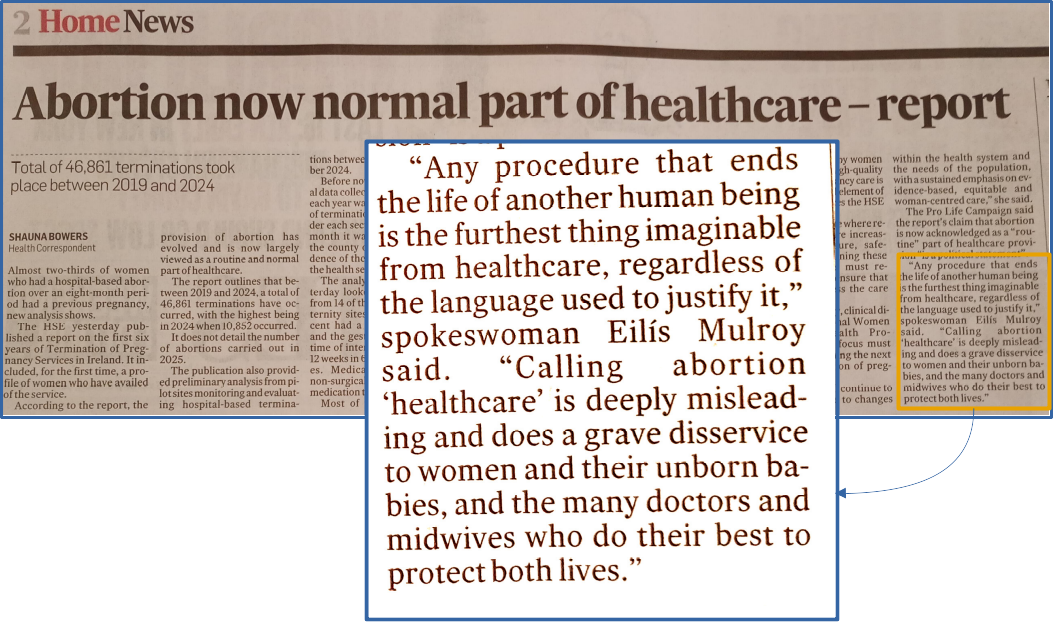
Figure 1. Abortion now considered ‘health care’
| Are you an anarchist — or at least sympathetic to anarchist ideas — and also ‘pro life’? I’d be happy to hear from you if so! |
More information
I strongly recommend Jana Espiritu Kimble’s presentation on abortion and eugenics. It is a four-part series. Links to the videos can be found on her website.
The ‘intersectional pro-life’ subreddit on Reddit.com might be of interest to some people.
The Pro life campaign website has valuable information and statistics regarding births and abortions in Ireland.
|
Comments disabled
Having observed the comments left by certain ‘pro-choice’ advocates on other pro-life sites, I have decided to disable comments on this article. There is a cohort of pro-choice people who troll pro life groups and repeat the same refuted arguments ad nauseam. It is abundantly clear that their comments and engagement are seldom if ever in good faith and their presence is generally corrosive and toxic. They are not going to use this site to astro-turf or gaslight or spread their views. People can still contact me by e-mail if they wish. But, if on reading your e-mail it becomes clear that you’re a ‘pro-choice’ advocate re-hashing the same old ‘bodily autonomy’ argument I will quite likely just delete your e-mail, and possibly block your e-mail address permanently. |
1. To his credit, the person in question also advocates for medical freedom and is against mandatory vaccination.
2. I use the term ‘foetus’ here in the broad sense — to refer to pre-natal development at any stage.
3. To further emphasize that abortion and same-sex relationships are entirely separate moral issues — and should be treated as such — bear in mind that in such a relationship there is never a risk of pregnancy to begin with!
4. I am referring here to the ‘negative’ philosophy of eugenics — a philosophy whild holds that some beings are worthy of life while others are not. In other contexts the term ‘eugenics’ may hold positive connotations. I don’t have time or space to go in to the distinction here, but it is worth noting that the distinction exists.
Comments
Comments on this article have been disabled.